


Acrylic Box Photo Frame: Clear Shadow Box Display, Sizes & Mounting
Summary:
Acrylic box photo frames (also called clear shadow boxes or acrylic display cases) protect and showcase 3D objects, prints, and memorabilia while keeping a minimalist aesthetic. This guide explains materials, sizes, mounting methods, customization, pricing logic, and buying checklists for B2B teams such as retailers, distributors, OEM/ODM partners, and project contractors.
Framing the problem: what buyers really need
Procurement teams want three things: a clean look, dependable protection, and easy installation. Acrylic box photo frames deliver all three. The transparent PMMA body creates a floating effect. A sealed cavity keeps dust away. Standardized hardware supports repeatable installs across stores, galleries, offices, and events. Bulk supply ensures consistent quality and labeling for multi-site rollouts.
Defining the product: what is an acrylic box photo frame?
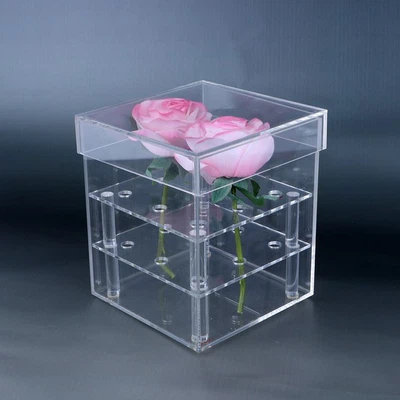
An acrylic box photo frame is a rigid, clear enclosure with a hollow interior. It displays items with space between the face and the backing. You get depth like a shadow box, but with the clarity and lightness of acrylic. Typical components include:
A clear front panel (cast or extruded acrylic)
Side walls forming the box depth
A backing panel (clear, frosted, or colored)
A closure (magnetic lid, hinged door, or screw-fixed back)
Mounting hardware (keyholes, standoffs, French cleat, or easel stands)
You can insert flat prints, 3D keepsakes, jerseys, flowers, coins, medals, collectibles, or small retail SKUs. The presentation feels modern, and the box protects the piece from fingerprints and light knocks.
Understanding materials: acrylic grade, thickness, and clarity
Choosing the acrylic type
Cast acrylic (PMMA, "GS"): higher optical clarity, better edge polish, better scratch resistance, ideal for premium displays.
Extruded acrylic ("XT"): more cost-efficient for mass runs, tight thickness tolerance, good for general retail programs.
UV-resistant acrylic: additives reduce yellowing and protect prints and fabrics from fading.
Anti-glare or matte acrylic: micro-textured finish softens reflections under strong lighting.
PETG or polycarbonate (special cases): higher impact resistance for public spaces, but polycarbonate can scratch more easily.
Selecting the wall and face thickness
Thickness affects stiffness, weight, and perceived quality:
2–3 mm: small desktop frames up to ~8×10 in (A4).
4–5 mm: mid-size wall frames up to ~16×20 in.
6–8 mm: large frames or deeper boxes up to ~24×36 in.
10–12 mm: extra-large boxes, museum-grade exhibits, or high-traffic zones.
Specifying optical clarity and edge polish
High-clarity PMMA transmits ~92% visible light. Flame-polished, diamond-polished, or CNC-polished edges produce a glass-like finish. For premium retail projects, diamond-polished edges deliver a refined, luxury look.
Sizing the frame: standard formats and recommended depth
Matching standard paper and photo sizes
For global rollouts, standardize around common formats to cut tooling and picking errors:
| Format | Inches (approx.) | Millimeters | Typical Face Thickness | Box Depth (Inside) | Use Case |
|---|---|---|---|---|---|
| 5×7 | 5×7 | 127×178 | 2–3 mm | 20–30 mm | Desktop gifts, mementos |
| 8×10 | 8×10 | 203×254 | 3–4 mm | 25–40 mm | Photos with small 3D items |
| A4 | 8.27×11.69 | 210×297 | 3–4 mm | 30–50 mm | Certificates, prints |
| 11×14 | 11×14 | 279×356 | 4–5 mm | 40–60 mm | Awards, medals |
| 16×20 | 16×20 | 406×508 | 5–6 mm | 50–80 mm | Jerseys (folded), bouquets |
| 18×24 | 18×24 | 457×610 | 6–8 mm | 60–100 mm | Posters + merch bundles |
| 24×36 | 24×36 | 610×914 | 8–10 mm | 80–120 mm | Large art, brand hero pieces |
Tip: choose inside depth based on the tallest element you plan to display plus 10–15 mm clearance for airflow and to avoid pressure on the front face.
Comparing constructions: lid, hinge, or screw-back
Choosing a closure system
Magnetic lid (lift-off or slide-in): fastest changeovers, clean look, popular for retail refreshes.
Hinged door with cam lock: secure access for public spaces; good for galleries, schools, museums.
Screw-fixed back panel: most tamper-resistant, perfect for permanent installs or transit-exposed walls.
Evaluating joints and bonding
Solvent-bonded acrylic seams: invisible joints, strong capillary bond, premium finish.
Mechanical corner blocks: serviceable, cost-friendly, and field-repairable.
Overlaps and rabbeted edges: better dust control and rigidity for larger formats.
Handling mounting: wall, tabletop, and freestanding options
Wall mounting options
Keyhole hangers: hidden hardware; mark studs; use level for alignment.
French cleat (aluminum): strong and secure for large frames; quick removal for changeovers.
Standoffs: four corner posts create a floating gap; bold, architectural look.
VHB tape (industrial): fast mounting on smooth walls for small sizes; confirm load rating and wall paint condition.
Best practice: for anything bigger than 16×20 in, use a French cleat or standoffs anchored to studs or proper wall plugs.
Tabletop and freestanding options
Easel stands: integrated clear acrylic easel for 5×7 and 8×10.
Base plinths: solid acrylic blocks or wooden bases create exhibition-style displays.
Countertop risers: multi-tier risers for retail bundles or museum tags.
Installing step-by-step: making setups repeatable
Preparing the wall
Mapping: mark centerline and height line; confirm sightlines.
Anchoring: locate studs or select wall plugs rated for the expected load.
Leveling: use a spirit level; pre-drill pilot holes; protect finished surfaces with masking tape.
Mounting the frame
Hardware: pre-assemble cleat or standoffs; check screw length vs wall build-up.
Handling: wear nitrile gloves; avoid fingerprints; place microfiber cloth underneath during prep.
Final hang: align cleat, engage hooks, confirm plumb, tighten standoff caps by hand (no over-torque).
Loading the content
Backing: use acid-free mount board for prints; consider foam spacers for 3D items.
Securing: use archival corners, invisible nylon line, or low-tack dots; avoid PVC tapes near artwork.
Cleaning: remove dust with a blower bulb; finish with acrylic-safe cleaner and microfiber wipe.
Protecting the display: dust control, UV, and safety
Managing dust and humidity
Sealed overlaps, gasketed doors, or precisely fitted lids reduce dust ingress. For humid spaces, add desiccant packets or choose a vented backboard to avoid condensation without inviting dust.
Blocking UV and glare
UV-blocking acrylic reduces fading for textiles and prints. Anti-glare faces help under track lights or shop windows. For museums, consider UV-99 acrylic and controlled lighting angles.
Preventing scratches and cracks
Acrylic is tough yet scratchable. Use soft cloths, non-ammonia cleaners, and protective films during install. Specify corner guards and film-wrapped panels for shipping. For high-traffic corridors, consider PETG or polycarbonate faces, or add replaceable sacrificial face sheets.
Designing the look: depth, color, and finishing details
Selecting depth for visual drama
Deeper boxes create stronger shadow lines and a floating feel. Shallow boxes look sleek but suit flatter content. For retail merchandising, 50–80 mm depth supports small bundles without overwhelming the wall.
Choosing color accents
While most buyers pick fully clear boxes, color adds brand personality:
Clear body + white back: clean gallery look.
Clear body + black back: strong contrast for medals, coins, and silver items.
Clear body + brand color back: retail storytelling and category segmentation.
Specifying edges and corners
Polished edges sparkle under light. Chamfered or radiused corners soften the profile and improve safety. Hidden joints maintain minimal lines for premium spaces.
Customizing for B2B programs: OEM/ODM options
Branding and labeling
Logo placement: laser engraving on the edge, silkscreen on the backer, or subtle corner mark.
SKU labels: barcode, internal code, and install iconography; consistent carton labels for fast receiving.
Instruction sheets: multilingual quick guides with QR codes; schematic drawings; maintenance notes.
Tailoring components
Face and wall thickness: match budget and size.
Backer materials: clear, frosted, PVC-free board, or aluminum composite for rigidity.
Closure choice: magnets for speed, hinge for security, screw-back for permanence.
Hardware kits: standoffs, cleats, or easels pre-packed by SKU to cut field errors.
Packaging and logistics
Protective films: both sides film-wrapped until final placement.
Corner foam & sleeve: shock absorption in transit.
Master carton planning: stackable cartons sized to pallet footprint; clear orientation marks; drop-test targets.
Bulk supply: stable monthly output with safety stock for seasonal peaks.
Planning by application: industry-specific scenarios
Retail merchandising
Rolling out seasonal collections, brand stories, and product education.
Using standoffs for a dimensional wall and quick swaps via magnetic lids.
Labeling inside the box for cleaner visual hierarchy on busy walls.
Corporate and hospitality
Displaying awards, certificates, curated artifacts, and donor walls.
Selecting anti-glare faces for lobbies and corridors.
Standardizing sizes across floors to trim maintenance costs.
Education and museums
Protecting student work, natural specimens, and cultural artifacts.
Locking hinged doors for public areas; adding UV-resistant faces.
Using archival supports for textiles and paper.
Sports and collectibles
Showcasing jerseys (folded), balls, gloves, tickets, and pins.
Choosing 60–100 mm internal depth for layered arrangements.
Adding branded backers or engraved plaques for premium sets.
Events and weddings
Preserving bouquets, invitations, and keepsakes in clean, dust-free boxes.
Renting standardized sizes, then selling custom versions after the event.
Offering on-site assembly with protective films removed at the last minute.
Selecting accessories: mounts, spacers, and fasteners
Archival mount corners: support prints without adhesives.
Invisible nylon line: suspend lightweight objects for a floating look.
Foam spacers and acrylic pedestals: add depth staging for 3D pieces.
Magnetic pins and micro-clips: repositionable object supports for retail refreshes.
Security screws: deter tampering in public spaces.
Ensuring compliance: materials and safety notes
Material safety: PMMA is BPA-free; request RoHS and REACH conformity for large tenders.
Fire behavior: acrylic is combustible; follow local fire codes; keep clear of high-heat sources.
Wall safety: verify load ratings; use proper anchors; document install guidelines for contractors.
Child safety: avoid small loose components in schools; specify tamper-resistant hardware.
Calculating total cost: price drivers and ROI levers
Understanding what drives cost
Acrylic thickness and grade: thicker, cast, UV-resistant, and anti-glare types cost more.
Size and depth: larger panels increase material and shipping cost exponentially.
Closure mechanism: hinges, locks, and custom magnets add parts and labor.
Edge finishing: diamond polishing and complex joints raise labor time.
Hardware kits: standoffs, cleats, and security screws add bill-of-materials.
Packaging: premium foam inserts, corner guards, and custom cartons cost more but cut damage rates.
Trimming costs without hurting the look
Shift to extruded acrylic on smaller sizes.
Standardize two or three depths for the whole program.
Use a shared backer color across SKUs to consolidate inventory.
Pick magnetic lids for fast in-store swaps and lower service calls.
Design cartons to fit pallet patterns and reduce dimensional weight.
Standardizing specs: a quick buyer's template
Frame family: Clear acrylic box photo frame (shadow box)
Acrylic type: Cast for large sizes, extruded for small sizes
Face thickness: 3 mm (≤A4), 5 mm (≤16×20), 8 mm (≤24×36)
Inside depth: 30, 50, 80 mm options
Backer: White or black PVC-free board, optional clear
Closure: Magnetic lid for retail; hinge + cam lock for public spaces; screw-back for permanent installs
Mounting: French cleat for large; standoffs for architectural look; keyholes or easel for small formats
Edge finish: Diamond-polished edges on premium sets
Protection: UV-resistant face for sunlit zones; anti-glare in spotlighted spaces
Accessories: Archival corners, foam spacers, nylon line, security screws
Packaging: Film-wrapped panels, corner foam, labeled inner boxes, stackable master cartons
Presenting a spec table: suggested SKUs for rollouts
| SKU | Format | Inside Depth | Face/Wall Thickness | Closure | Mounting | Backer | Notes |
|---|---|---|---|---|---|---|---|
| CB-A4-30M | A4 | 30 mm | 3/3 mm | Magnetic | Keyholes | White | Certificates, photos |
| CB-A4-50S | A4 | 50 mm | 3/3 mm | Screw-back | Standoffs | Black | Small 3D objects |
| CB-1114-50M | 11×14 | 50 mm | 4/4 mm | Magnetic | French cleat | White | Awards, medals |
| CB-1620-80H | 16×20 | 80 mm | 5/5 mm | Hinged + lock | French cleat | Black | Public corridor |
| CB-2436-80M | 24×36 | 80 mm | 8/6 mm | Magnetic | French cleat | White | Retail hero pieces |
Running quality control: what to test before ship
Dimensional tolerance: ±0.5–1.0 mm on small sizes; ±1.0–1.5 mm on large.
Bond strength: tensile or peel checks on solvent joints; no bubbles or crazing.
Surface inspection: scratch, haze, particle counts under side light.
Hardware verification: full kit count, thread engagement, and load test on standoffs.
Packaging drop tests: corner and edge drops at specified heights.
Label accuracy: SKU, size, color, orientation, and mounting diagram included.
Operating and caring: cleaning and routine maintenance
Use acrylic-safe cleaners; avoid ammonia and harsh solvents.
Rinse dust first to prevent micro-scratches; wipe with microfiber in straight lines.
Retain protective films until final positioning; remove fingerprints with gentle pressure.
Check mounting hardware annually in public spaces; re-torque standoffs if needed.
Solving common issues: quick troubleshooting
Cloudy appearance: residue from cleaner → switch to acrylic-safe formula; polish lightly.
Static dust attraction: use anti-static spray or wipe; keep humidity moderate.
Door misalignment: adjust hinge screws; check wall plumb; shim cleat if required.
Sag on large units: increase face thickness or add hidden cross-brace; move to French cleat.
Glare under spots: swap to anti-glare face or change lighting angle; consider matte backer.
Planning procurement: MOQ, lead time, and documentation
MOQ: often 100–200 pcs per size for stable pricing; mixed-size MOQs available on request.
Lead time: 15–30 days for standard sizes; 30–45 days for custom colors or hinge-lock sets.
Samples: pre-production samples with edge finish and hardware verification.
Docs: packing list, installation guide, maintenance sheet, and compliance declarations.
Building a decision matrix: picking the right configuration
If you prioritize speed of content refresh: choose magnetic lids and keyholes (≤16×20) or French cleats (≥18×24).
If you prioritize security in public areas: choose hinged doors with locks and French cleats.
If you prioritize premium aesthetics: choose cast acrylic, diamond-polished edges, and standoffs.
If you prioritize budget for large runs: choose extruded acrylic for small sizes and standardize two depths.
Benchmarking acrylic vs. glass shadow boxes
Weight: acrylic is ~50% lighter than glass at similar thickness → easier installs, safer overhead.
Impact resistance: acrylic resists shattering; safer for busy spaces and shipping.
Clarity: high-grade acrylic rivals or exceeds typical glass clarity; museum glass offers low reflection but at a higher cost.
Maintenance: acrylic scratches more easily; offset by proper cleaners and protective films.
Writing a ready-to-print brief: fast spec handover to vendors
Title: Clear Acrylic Box Photo Frame (Shadow Box), Wall-Mounted / Tabletop
Sizes: A4, 11×14, 16×20, 24×36 (custom on request)
Depths: 30 / 50 / 80 mm internal
Material: Cast PMMA for large sizes, extruded PMMA for small sizes; UV-resistant face optional
Edges: Diamond-polished edges visible on all sides
Closure: Magnetic lid (retail) or hinged door with lock (public) or screw-back (permanent)
Mounting: French cleat or standoffs (wall); easel (desktop)
Backer: White/Black PVC-free board; custom colors on request
Accessories: Archival corners, foam spacers, nylon line, security screws
Packaging: Film-wrapped panels, corner protectors, labeled inner and master cartons
QC: Dimensional tolerance, bond strength, surface inspection, hardware count, packaging drop test
Docs: Install guide, maintenance instructions, material compliance sheets
Answering FAQs
Q1: What sizes work best for retail walls?
Use 11×14 and 16×20 for most category cards and small displays. Mix in 24×36 hero units for focal points.
Q2: How deep should the box be for 3D items?
Start at 50 mm inside depth for medals and small objects. Go to 80–100 mm for layered sets or small merch bundles.
Q3: Can I mount a very large box on drywall?
Yes, but use a French cleat and proper anchors, or mount to studs. Large frames need secure load paths.
Q4: Will acrylic yellow over time?
Quality PMMA resists yellowing. UV-resistant grades protect contents and keep the frame clear longer.
Q5: How do I avoid glare under track lights?
Use anti-glare acrylic faces or change the light angle. Matte backers also reduce reflections.
Q6: What is the best way to clean the panels?
Use acrylic-safe cleaner and a microfiber cloth. Avoid ammonia, paper towels, and abrasive pads.
Q7: Can the frames be tamper-resistant?
Yes. Choose hinged doors with locks or screw-back panels with security screws and hidden cleats.
Q8: Can I add branding without making it look busy?
Use laser engraving on edges, a subtle silkscreen on the backer corner, or a small plaque inside.
Q9: What minimum order quantities apply for custom colors?
Expect 200–300 units per color and size for efficient production. Mixed cartons may be possible.
Q10: How long does installation take per unit?
Small units take 5–10 minutes with keyholes. Large units with French cleats and standoffs take 15–25 minutes when walls are pre-marked.
Closing the loop: turning specs into reliable rollouts
Acrylic box photo frames combine clarity, depth, and protection in one clean package. B2B buyers gain repeatable installs, flexible branding, and lower damage rates than glass. Standardize sizes and depths, choose the right closure and mounting, and lock a packaging plan that keeps units pristine. With a clear spec, your program scales across stores, offices, and venues without guesswork.
Need a quotation or a sample kit?
Share your target sizes, inside depth, preferred closure, mounting method, and monthly volume. We will return a detailed BOM, packaging plan, and lead time to match your rollout schedule.


