


Custom Acrylic Products
An unvarnished look at manufacturing, from material sourcing to the realities of shipping damage.
Acrylic sheet comes from two processes. Cast acrylic gets poured between glass plates and baked. Extruded acrylic gets pushed through a die like toothpaste. The cast stuff machines cleaner and takes solvent cement without crazing. Extruded is cheaper. Most buyers pick extruded and then complain about the results six months later.
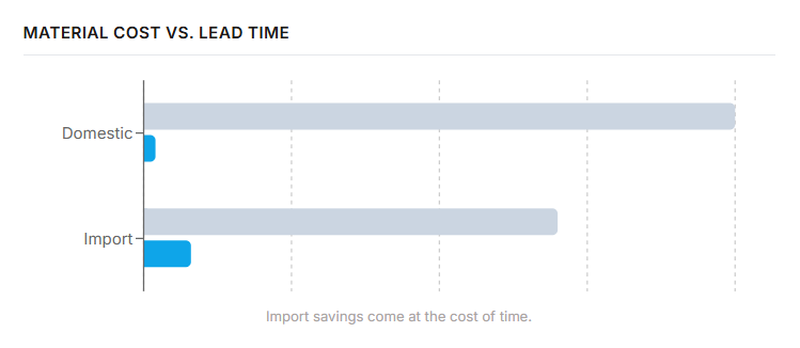
Plaskolite and Piedmont Plastics supply most of the domestic market. Evonik makes Plexiglas. Altuglas is Arkema. Same polymer, different brand stamps. Import sheet from Asia runs 20-40% less but lead times stretch to 8 weeks on container freight.
Laser Cutting
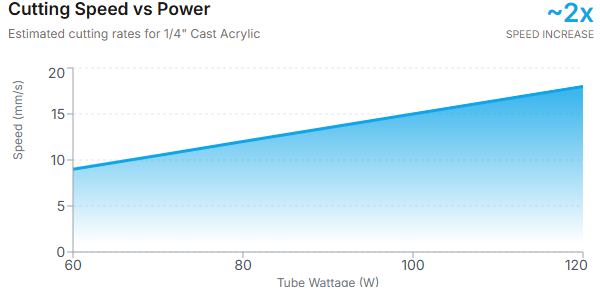
The Epilog and Trotec machines in most job shops run 60-120 watt CO2 tubes. A 60 watt cuts quarter inch cast at maybe 8-10mm/sec with decent edge. Bump to 120 watts and you can double that.

Precision machinery requires precise settings.
Extruded acrylic is a different animal. Same settings that give you a glass-clear edge on cast will leave extruded looking frosty and full of micro-bubbles. The molecular chains orient differently coming out of the extrusion die. You have to slow down 15-20% and sometimes drop power slightly.
The other problem with extruded is internal stress. A laser heats a narrow band to maybe 600°C. That stress releases. Parts warp. Small parts, fine. Anything over 12 inches and you start seeing bowing. Cast material has more uniform stress distribution and stays flat.
Air assist matters. The compressor on a $40,000 Trotec puts out cleaner air than the aquarium pump someone rigged on their cheap Chinese K40. Oil mist from a bad compressor deposits on the lens and the optics degrade. Lens replacement runs $200-400 depending on the machine.
Solvent Bonding
IPS Weld-On dominates. The #3 is water-thin. Capillary action pulls it into tight joints. The #4 is slightly thicker for joints with minor gaps. The #16 is syrup for structural bonds and gap filling.
The Flame Polish Mistake
Here is where people screw up. They flame polish an edge to make it look pretty, then try to solvent weld it.
Flame polishing melts the surface and creates a dense skin. Solvent can't penetrate. The joint looks bonded but pulls apart under load. Sand the mating surfaces to 320 grit minimum. The scratch pattern gives the solvent somewhere to go.

Applying too much cement craters the surface. Weld-On contains methylene chloride. It attacks acrylic aggressively. A drop that runs down the face of a part leaves a visible track. No fixing it. The part is scrap.
Clamping pressure should be almost nothing. Just enough contact to let capillary action work. People overtighten and squeeze cement out the sides. Now you have squeeze-out marks to deal with.
Joint strength done right exceeds the base material. The two pieces literally become one. Done wrong and you get stress crazing that shows up weeks or months later as a spider web of tiny cracks.
Thermoforming
Vacuum forming is straightforward in concept. Heat sheet to 300-340°F until it sags. Drop it over a male mold. Pull vacuum. The sheet conforms.
Reality is messier. Acrylic has memory. Heat it unevenly and it springs back unevenly when cooled. Hot spots from bad heater element spacing show up as thin spots in the finished part. The material stretches more where it is hotter.
Draw ratio determines wall thickness distribution. A 6 inch tall box formed from flat sheet will have corners maybe 40% thinner than the flat areas. Deep draws with sharp corners fail in service. The material at the radius is just too thin.
Mold Tooling
MDF
Good for prototypes. Edges degrade after ~10 pulls.
Aluminum
High upfront cost. Holds up for thousands of cycles.
Temp-Controlled
Water channels provide consistent results across long runs.
Female molds need pressure assist. Vacuum alone cannot push material into recessed details. 5-8 PSI behind the sheet makes the difference between a crisp corner and a rounded blob.
Mold material matters for production runs. MDF works for prototypes. Ten pulls and the edges start degrading. Aluminum tooling costs more upfront but holds up for thousands of cycles. Temperature-controlled molds with water channels give consistent results across long runs.
The Collectibles Market
This segment barely existed ten years ago. Now it is a substantial slice of the custom acrylic business.

The unboxing experience matters to someone spending $80 on an acrylic case.
Anime standees. Badge display cases. Figure risers with LED edge lighting. The tolerance requirements are tighter than traditional POP displays. A sign holder with a slightly uneven edge still functions. A collectible display case with visible tool marks or unpolished spots gets returned.
UV printing direct to acrylic opened up the standee market. Print the character art, cut the profile, add a slot base. Simple in concept but the registration between print and cut has to be dead on. A millimeter off and the white border shows on one side. Collectors notice.
These customers also care about packaging. The display case itself needs protection during shipping. Foam inserts. Tissue interleaving. Double boxing. The unboxing experience matters to someone spending $80 on an acrylic case for their figure.
Production Notes
The Golden Rule
Sample approval before production is not optional. CAD looks different than physical parts. A thickness that seems adequate on screen feels flimsy in hand. Color matching from a Pantone chip to actual tinted acrylic involves trial runs. Rush the approval and you end up with 500 pieces nobody wants.
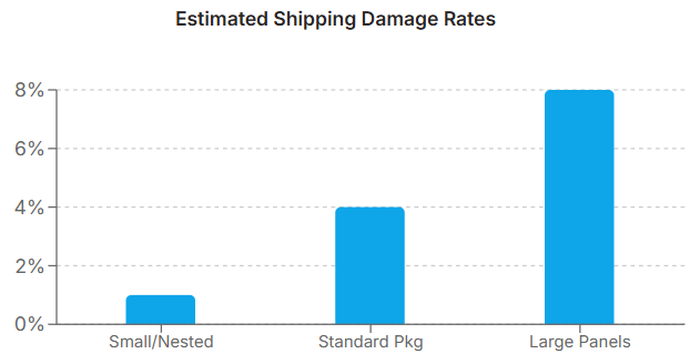
Shipping damage runs 3-5% on average with standard packaging. Higher for large flat panels that flex in transit. Lower for small chunky parts nested in foam. Freight claims are a headache. Carriers deny, delay, lowball. Some shops build expected damage into their pricing rather than fighting every claim.
Domestic versus offshore is not straightforward. A simple item with stable design and high volume makes sense to source overseas. Anything with ongoing design changes, short runs, or tight delivery windows favors local production. The per-piece savings from Asia disappear fast when you factor air freight to meet a deadline after the sea container missed its slot.


