


If someone quotes you glass display cases with "LED retrofit available" for exhibition use, stop that conversation immediately. We manufacture custom acrylic exhibition fixtures at our Shenzhen facility, have been doing so since 2010, and ship to CES, Canton Fair, Cosmoprof, and roughly forty other trade shows annually. We have watched enough glass fixtures arrive shattered or get abandoned in convention center dumpsters to know that material selection is not an aesthetic preference. It determines whether your exhibition investment generates qualified leads or generates insurance claims.
The integration between LED lighting and acrylic is an engineering problem, not a styling decision. Our factory processes approximately 200 trade show display orders per year, with LED-integrated units representing over 65% of that volume.

Wrong Color Temperature Makes Products Look Cheap
Most fixture vendors default their LED strips to 5700K or higher because that is what component suppliers stock in bulk quantities. At 5700K, products look like they are under interrogation lighting. Textures disappear. Metallic finishes flatten. Skincare packaging that cost $3 per unit to develop becomes visually indistinguishable from $0.30 counterfeits displayed in the booth next door.
Our standard LED specification for trade show acrylic display systems runs between 3500K and 4000K. This range produces optimal results under typical exhibition hall conditions where overhead lighting combines metal halide fixtures with LED panels. Jewelry and watch displays can push toward 4500K for enhanced sparkle, but exceeding that threshold creates the clinical appearance that undermines premium positioning. When a supplier says "warm white works fine" without specifying the actual Kelvin rating, that supplier does not understand exhibition lighting requirements, and you should not be working with them.
The color rendering index matters equally. CRI below 90 distorts how colors appear under your display lighting compared to how they appear in natural light. We spec CRI 95+ LEDs for cosmetics and fashion accessory displays where color accuracy directly affects purchasing decisions. This adds roughly 15% to the LED component cost. Clients who declined this upgrade and then saw their lipstick shades look wrong under booth lighting came back for the next show with revised specifications.


Light Transmission Numbers Are Not Marketing
Cast acrylic transmits 92% of incident light. Standard float glass transmits 80-90% depending on thickness and coating specifications.
That difference exceeds 10% in real installations, which means more of your LED investment reaches products instead of being absorbed by display material. The technical specification comes from material suppliers, and independent sources confirm identical figures.
Weight and breakage matter more for exhibition applications than transmission percentages.
Our 2024 shipping records show acrylic trade show display fixtures at 0.4% transport damage claim rate across all international shipments. Glass display orders during the same period exceeded 7% claim rate. We handle glass reluctantly and only when clients insist despite our recommendations.
Exhibition fixtures get packed onto pallets, moved by forklift operators who have never seen them before, loaded into containers, unloaded by different crews, assembled by installation teams working against setup deadlines, disassembled, repacked, and shipped to the next show. Glass survival rates through this cycle do not justify the investment.
The weight differential compounds through every cost line in your exhibition budget. Acrylic weighs approximately half what equivalent glass weighs. Drayage fees at union convention centers calculate by hundredweight. Shipping costs from our facility to your freight forwarder calculate by volumetric or actual weight, whichever is higher. Setup crews work faster with lighter components. A 10x10 booth display system in acrylic that two people can install becomes a four-person job with equivalent glass fixtures.
Cast Versus Extruded Acrylic for LED Integration
We quote cast acrylic for all LED-integrated exhibition display fixtures. No exceptions.
Extruded acrylic costs approximately 30% less, and procurement teams ask about substitution on nearly every order. Our answer remains consistent: structural components can use extruded material, optical components cannot. Extruded acrylic begins softening around 195°F, and enclosed display cabinets under exhibition hall lighting reach internal temperatures of 150-170°F in our measurements. We have seen edge-lit panels fabricated from extruded material begin warping on day two of CES, which is exactly what happens when someone tries to save $200 on material and loses a $15,000 exhibition investment.
Edge-lit acrylic display panels require minimum 1/4 inch thickness for uniform light diffusion. Below that threshold, visible hot spots appear where LEDs contact the panel edge, creating the uneven glow that undermines the clean appearance edge lighting should produce. Above 3/8 inch, additional thickness adds cost without improving optical performance. Most procurement specifications do not mention this parameter, but it directly determines visual results.
Laser cutting on cast acrylic produces what fabricators call flame-polished edges. The cut surface emerges smooth and optically clear without secondary polishing operations. This property matters significantly for edge-lit designs where the panel edge itself becomes part of the visible light transmission path. Extruded material requires additional edge finishing to achieve comparable results, eliminating most of the cost advantage that motivated the substitution request in the first place.

Projects We Do Not Accept
- Glass exhibition display fabrication. Breakage rates create after-sales complications we have decided to avoid entirely.
- Rush orders under three weeks from quote acceptance to shipment. Our laser cutting and CNC machining schedule cannot accommodate single-order disruptions without compromising quality or requiring pricing that makes the order uneconomical for clients.
- Quotation requests without specifications. Inquiries stating "give me a price for acrylic display" without dimensions, quantities, or application context do not receive responses. Our experience shows these inquiries convert to orders less than 1% of the time while consuming engineering review hours needed for serious projects.
- LED-integrated trade show acrylic display projects with unclear electrical requirements. Booth power varies between 110V and 220V depending on venue and country. Clients who cannot confirm their power situation before production begins should clarify with their exhibition contractor first.
Pricing for Illuminated Trade Show Display Fixtures
- Countertop LED-integrated acrylic display stands for jewelry, cosmetics, or small electronics: $80-$300 FOB Shenzhen. Final pricing depends on dimensions, LED specifications, and whether custom color matching on the acrylic is required.
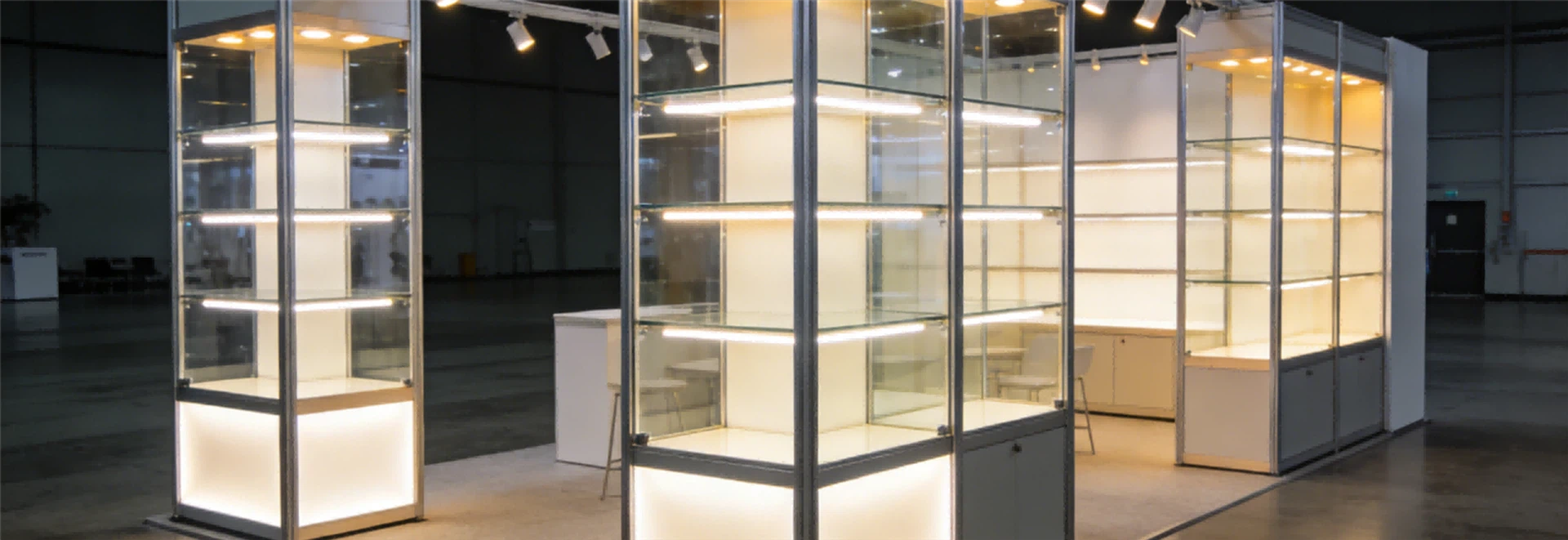
- Floor-standing illuminated display cabinets sized for 10x10 booth coverage: $1,800-$4,500. This range includes LED drivers, wiring harnesses, and export-standard EPE foam packaging with protective film on all optical surfaces.
- Complete modular exhibition display systems with integrated lighting designed for larger booth configurations: $3,500-$8,000 depending on component count and customization requirements.
- First-order tooling fees for custom designs: $500-$2,500 depending on complexity. Tooling belongs to the client and transfers if you change suppliers. Negotiate this point before placing orders because many factories do not volunteer the information.
American domestic fabrication runs 3-4x these price points for comparable specifications. We know because we have lost quotes to US shops, then received the same clients back when their $8,000 domestic fixture arrived with worse dimensional tolerances than our $2,200 version. The tradeoff is lead time: our production runs 4-6 weeks plus shipping transit, which does not work for anyone who needs fixtures in under two weeks.
Requesting Quotation
Send specifications to ouke@szok.com.cn including: dimensions in millimeters or inches, order quantity, intended application, target price range if established, and the exhibition name and date where fixtures must arrive.
We respond to complete inquiries within 24 hours. If specifications are clear, pricing appears in the response. If sampling is required for production validation, samples ship within 5-7 working days. Sample charges credit toward production orders exceeding minimum thresholds.
WhatsApp: +86 136-6255-2352 for clients preferring direct communication.
Ouke Acrylic operates a 3,000 square meter ISO-certified production facility in Shenzhen with specialized capabilities in LED-integrated acrylic fabrication for exhibition, retail, and merchandising applications. Factory established 2010. Explore our full range of watch display stands and other premium display solutions.


